
Last updated November 15, 2026
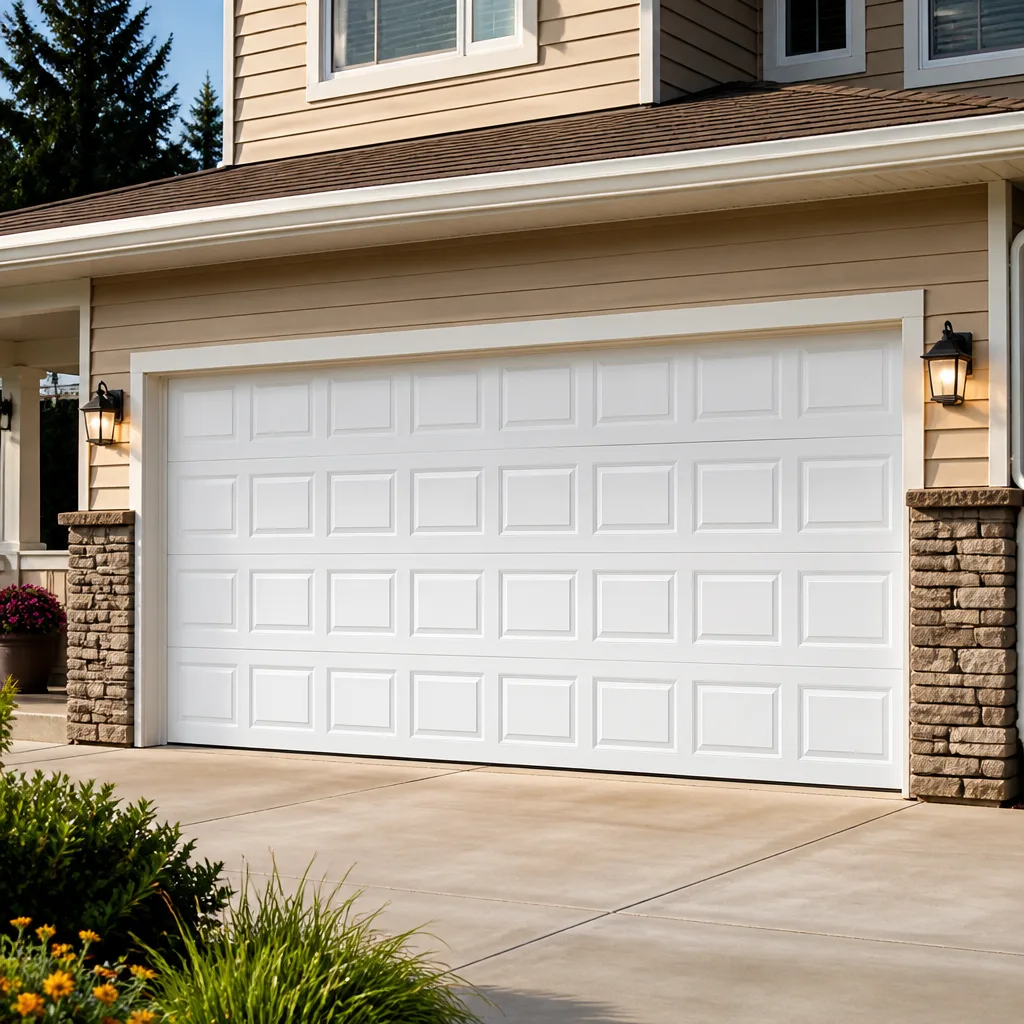 Raised-panel steel
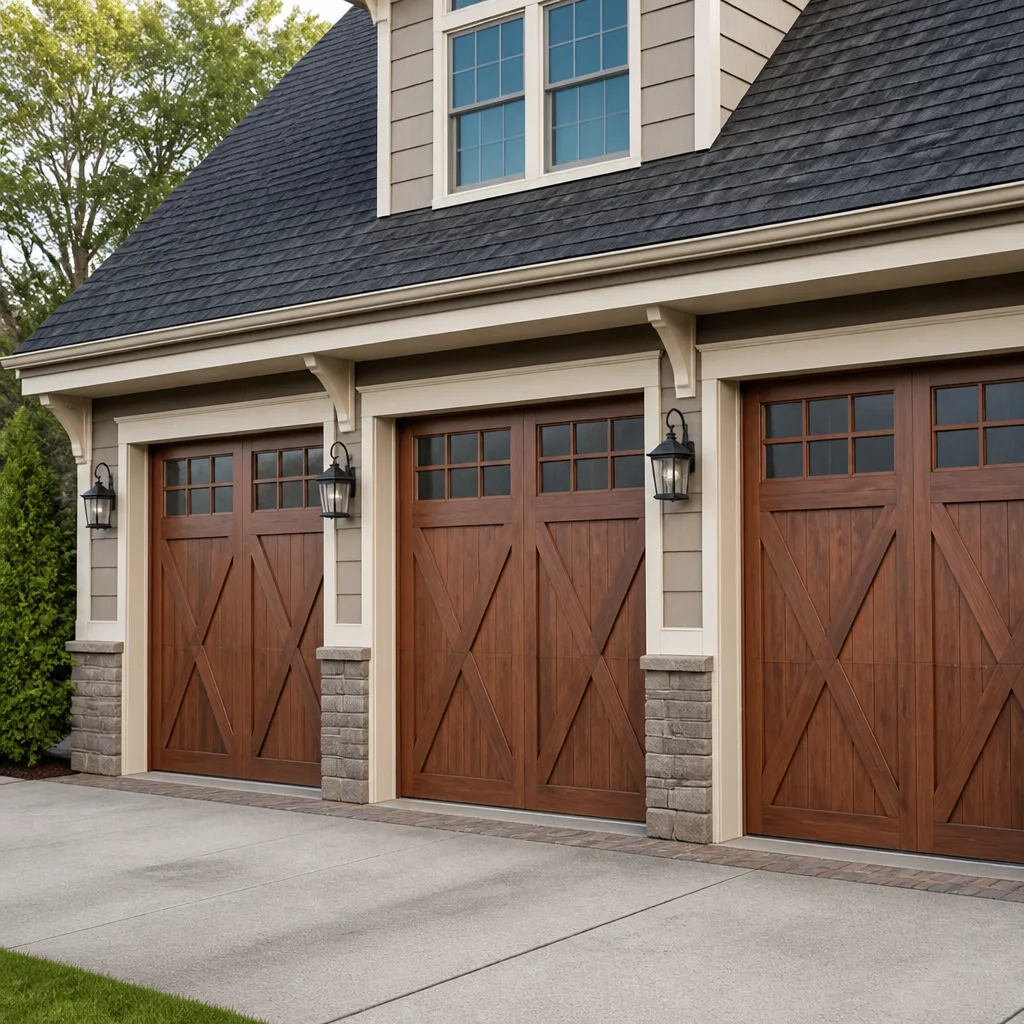 Carriage house
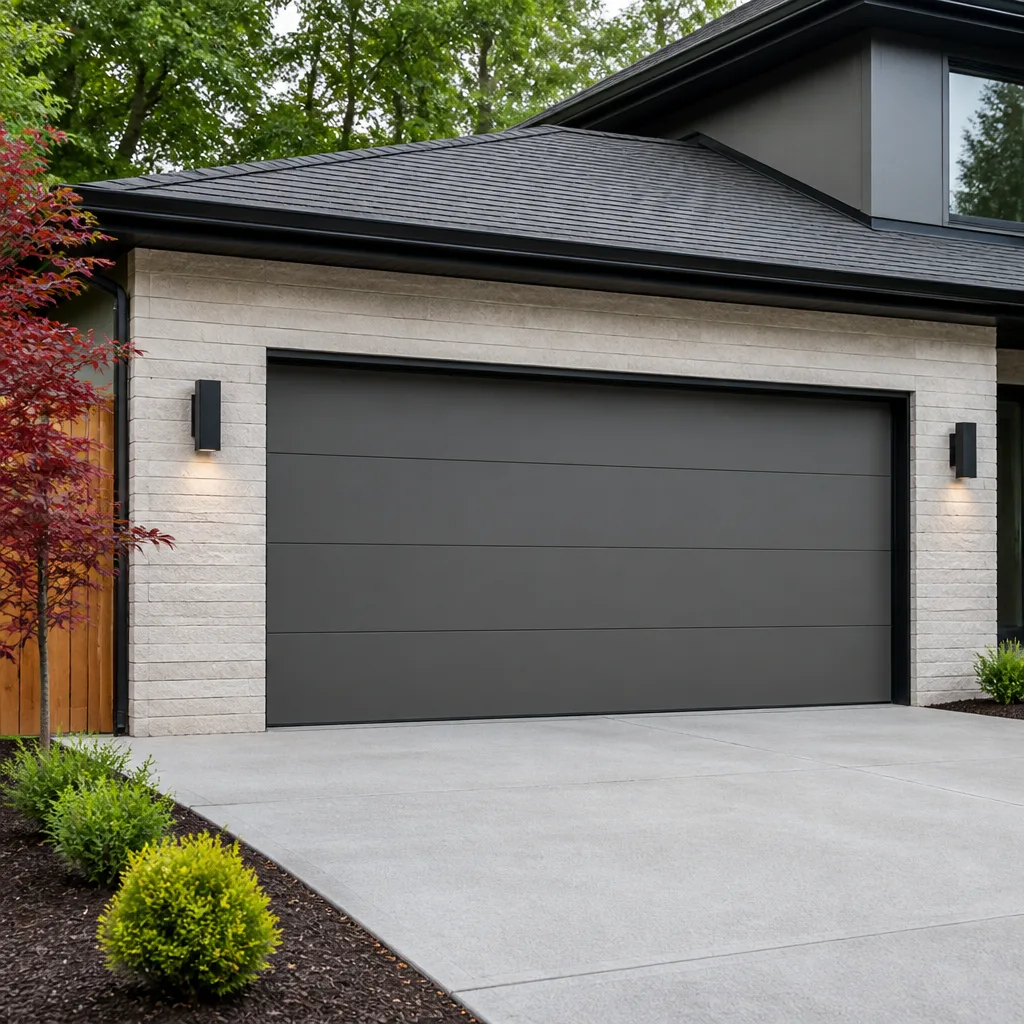 Modern flush
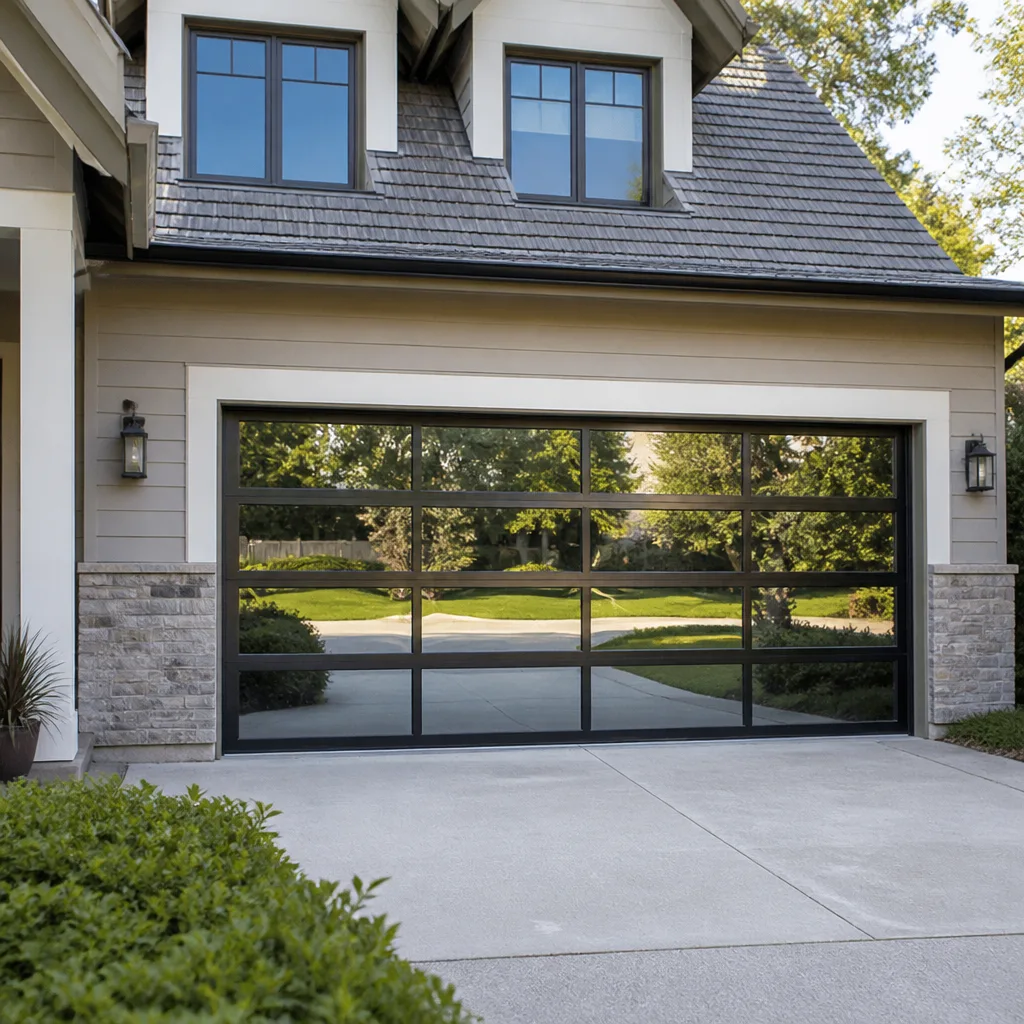 Full-view glass
 LiftMaster openers
 Chamberlain openers
Full 25-point door and opener safety check with every visit - springs, cables, rollers, tracks, and your LiftMaster or Chamberlain opener included
You get a price before we start. It does not change when the pro arrives.
Get your free estimateGarage Door Repair Troubleshooting in Abilene: Common Problems and How to Fix Them
A garage door that reverses before it closes isn’t broken. It’s working exactly as designed. The problem is almost always a misread safety sensor or a limit switch that needs two turns of a screwdriver, not a failed motor or a snapped spring. Most homeowners in Abilene assume the worst the moment the door acts up, and that assumption leads straight to a service call they didn’t need. In our experience, the trick is knowing the difference between a door that’s failing and a door that’s protecting itself. This guide maps symptoms to causes, so you can self-triage before you pick up the phone. You’ll learn what each behavior points to, what Abilene’s heat and dust do to doors, and exactly where safe DIY ends.
Quick Answer
Most garage door problems in Abilene fall into five categories: a door that won’t open, won’t close, opens partway and stops, makes noise, or moves slowly. Sensor misalignment and limit switch drift cause the bulk of reversing and short-travel doors and are safe to check yourself. Any problem tied to springs, cables, or panel wiring is not a DIY job. Call a trained technician for those.
Styles & brands we work with
- Raised-panel steel
- Carriage house
- Modern flush
- Full-view glass
- LiftMaster openers
- Chamberlain openers
Table of Contents
- The Symptom-to-Cause Diagnostic Tree
- Why Abilene’s Heat and Dust Cause Door Problems
- The Sensor Alignment Test Most Guides Skip
- Why a Door Opens Partway and Stops
- What Noise Tells You About Your Door
- Decoding LiftMaster, Chamberlain, and Genie Error Signals
- Stop-Here Thresholds: When DIY Ends
- Common Mistakes to Avoid
The Symptom-to-Cause Diagnostic Tree
Before you call anyone, watch the door. Not the opener motor, the door itself. The behavior of the door tells you more than any error code in the first minute. Here’s how we break it down on a garage door repair call, and how you can do the same at home.
Won’t open at all from the wall button: check power to the opener first, then the wall control wiring, then the door lock or vacation mode. If the motor hums but the door doesn’t move, that points to a mechanical bind or a broken spring.
Won’t close, reverses immediately: this is almost always a safety sensor or a limit switch, not a dead motor. A door that reverses is doing what it’s built to do.
Opens partway and stops: limit switch setting, a track obstruction, or a door binding against an expanded track.
Makes grinding or squealing noise: worn rollers, dried hinges, or a roller that has come off its track.
Moves slowly or jerks: a failing spring, a strained motor, or grit in the rollers.
Each one of these has a different fix and a different safety profile. A sensor adjustment is a two-minute job. A broken spring is not. Learning to tell them apart is the single most useful troubleshooting skill you can develop for your door.
Why Abilene’s Heat and Dust Cause Door Problems
National garage door guides are written for a climate that isn’t yours. Abilene summers push metal tracks outward as they expand, and that expansion is one of the most common causes of a door that suddenly binds and jerks partway up. The door panels stay the same size; the track doesn’t. When the metal grows, the clearance between roller and track shrinks, and a door that ran smooth in spring starts grinding by July.
Then there’s the dust. Open plains and dry conditions blow fine grit into every moving part. That grit works its way into roller bearings, hinge pivots, and spring coils. Over a season or two, the grease that kept things smooth picks up that grit, and the rollers start to sound like they’re chewing. A door that’s loud in Abilene often just needs cleaning and fresh lubricant in the right spots.
What this means for you:
- Check track alignment after the first stretch of intense heat each summer; binding that appears suddenly is often expansion, not damage.
- Wipe and re-lubricate rollers and hinges more often than the national advice suggests, because the grit load here is higher.
- Watch the bottom seal and weatherstripping, which dry out and crack faster in sustained heat.
- Listen for a new sound rather than waiting for a failure; noise is the early warning that beats the breakdown.
These aren’t things most homeowners think about, but they’re the reasons doors in Abilene act up in ways a generic guide never covers.
The Sensor Alignment Test Most Guides Skip
When a door reverses before closing, most people assume the logic board has failed. That’s the expensive guess, and it’s usually wrong. Before you spend anything, run the flashlight test and the dollar-bill test. Together they’ll tell you whether you have a sensor problem or something deeper.
- Check the sensor lights. Each of the two safety sensors at the bottom of the track has an indicator light. If one is off or blinking instead of steady, the sensors aren’t “seeing” each other.
- Use a flashlight to confirm the beam. Shine a light across from one sensor to the other. If the receiving sensor doesn’t respond, the beam is blocked or misaligned.
- Wipe both lenses. Abilene dust coats these lenses faster than you’d expect. A dry cloth on each lens fixes more “failed sensor” calls than any part replacement.
- Look for a blockage. Check for a broom handle, a garden tool, or a low-hanging item in the beam path. This is common and easy to miss.
- Loosen and re-aim. Each sensor has a mount you can nudge. Point them at each other until both lights go steady, then tighten.
- Run the dollar-bill test. With the door closed, lay a bill across the threshold in the sensor beam’s path and hit the close button. If the door doesn’t reverse when the bill blocks the beam, the sensor isn’t working and needs attention.
The flashlight test confirms alignment. The dollar-bill test confirms function. If both pass and the door still reverses, that’s when you start suspecting the opener’s brain rather than its eyes, and that’s a technician’s call.
Why a Door Opens Partway and Stops
A door that rises a foot or two and then reverses or stops is sending you a message about travel limits. The opener thinks the door has reached its open position before it actually has. Most openers let you adjust the up-limit with a small screw; a slight turn moves the stopping point. But the limit isn’t the only suspect.
Two other causes are common in Abilene:
- A track that has expanded and pinched a roller. Heat pushes the track, the roller catches, and the opener hits its force limit and stops. The travel limit isn’t the problem; the door is genuinely binding.
- A weakening spring. As spring tension drops, the opener has to lift more weight than it’s rated for and hits its safety cut-off. This is a mechanical wear issue, not an adjustment issue, and it crosses into technician territory.
Here’s how to tell them apart. Disconnect the opener by pulling the emergency release so the door runs free. Now lift the door by hand. If it moves easily and stays up where you leave it, the door is balanced and the limit switch is likely the issue. If it feels heavy, won’t stay up, or grinds as it rises, the spring or track is the cause and the opener is doing you a favor by stopping.
If the door is heavy or won’t hold position, stop. A weakened spring is under high tension, and adjusting or removing it is the single most dangerous thing a homeowner can try on a garage door.
What Noise Tells You About Your Door
Your door makes noise before it makes trouble. Learning the language of those sounds saves repair bills.
- Grinding or metal-on-metal scraping: worn rollers, a roller off its track, or grit-packed bearings. In Abilene dust, this is often just a cleaning and lubrication job caught early.
- Squealing or high-pitched whine: dry hinges and roller shafts. A little lubricant on the right pivots quiets it fast.
- Rattling over the whole travel: loose hinge bolts or panel hardware. Tighten what you can reach safely from a step stool, never from a ladder leaning on the door.
- Loud bang followed by a door that won’t fully open: a tension spring has broken. This is a stop-the-presses moment. Do not run the opener, do not force the door, and call a technician.
- A single loud pop during operation: could be a spring or a cable slipping off its drum. Both are technician work.
Most noise complaints trace to two things: lubrication and grit. Keep the rollers, hinges, and spring coils clean and lightly lubricated with a product meant for garage doors, and you’ll eliminate the bulk of the noise and slow the wear at the same time. If the noise comes with a sudden change in how the door moves, that’s no longer a noise issue. That’s a mechanical one.
Decoding LiftMaster, Chamberlain, and Genie Error Signals
Every major brand talks to you in a different language. Knowing your opener’s dialect turns a mystery into a diagnosis. Here’s how the three most common systems signal a problem.
LiftMaster: these units use a numbered error code on the control panel or a pattern of up and down arrows on newer models. A sensor code usually points to the safety eyes; a logic code points inward. Note the code before you do anything else, because it points you to the right system.
Chamberlain: Chamberlain openers often use a beep pattern from the motor head. A certain number of beeps maps to a specific failure, and the pattern is the diagnosis. Count the beeps and match them to your model’s chart.
Genie: Genie units blink the light on the opener in a count. The number of blinks tells you where the failure sits, from sensor to travel limit to a motor fault.
Two things matter more than the pattern itself. First, find your model number before you search for the code, because codes vary by model. Second, write down what you see. A technician who arrives knowing which signal you saw can spend the visit fixing the problem instead of chasing the symptom. We work on LiftMaster, Chamberlain, Genie, Clopay, Amarr, Wayne Dalton, Craftsman, and Raynor equipment, so we’ve seen these patterns enough to translate them without guessing.
If your brand-specific signal points to a sensor, you can often resolve it with the alignment test above. If it points to a travel limit, force setting, or motor fault, that’s a technician’s visit. Our garage door opener repair service exists precisely because the motorized half of the door deserves its own expertise.
Stop-Here Thresholds: When DIY Ends
Some problems reward a homeowner with two minutes and a screwdriver. Others can hurt you. The line between them is clearer than most people think, and knowing where it sits is part of being a responsible owner.
Safe for most homeowners to tackle:
- Sensor lens cleaning and re-aiming.
- Flashlight and dollar-bill sensor tests.
- Lubricating rollers, hinges, and spring coils (never the tracks themselves).
- Tightening accessible hinge and bracket bolts from the ground or a stable step stool.
- Checking the opener’s power source and wall control wiring.
- Adjusting the up-limit screw a turn or two on the opener.
- Cleaning debris and grit out of the track channels.
Stop here and call a trained technician:
- Anything that requires touching a torsion spring or extension spring. Springs store enormous tension, and an accidental release can cause serious injury. There is no safe shortcut here.
- Any loose or snapped cable. Cables are under tension too and can whip when released.
- Removing or reinstalling a roller that’s come off a track on a loaded door.
- Any electrical work inside the opener’s housing or on the panel wiring.
- A door that’s off-level, off-track, or visibly sagging at the corners.
Our technicians have up to 11 years of experience, and the one thing they all say is the same: the problems that send people to the emergency room are the ones that looked like a quick fix. When in doubt, treat it as a technician job.
Common Mistakes to Avoid
- Forcing a reversing door to close by holding the button. That bypasses the safety sensor and can let the door come down on a person or a pet. Fix the sensor instead.
- Lubricating the tracks. This is the single most common mistake we see. Grease on the tracks collects Abilene dust and gums up the rollers; tracks run dry and clean. Lubricate the rollers and hinges, not the rail.
- Assuming a sensor failure means a logic board replacement. Nine times out of ten it’s a dirty lens or a bumped sensor. Run the flashlight and dollar-bill tests first.
- Adjusting a spring to “tighten” a slow door. Springs are pre-tensioned to a specific setting, and messing with them is dangerous and usually makes things worse. Slowness is a technician diagnosis.
- Ignoring a new noise for weeks. A squeal that could be fixed with lubricant becomes a roller replacement when it’s ignored. Catch it early.
- Pulling the emergency release while the door is partway up. This can send the door crashing down. Only use the release when the door is fully closed, or with a technician present.
- Buying a replacement opener before confirming the door is balanced. A door that’s off-balance wears out the new motor too. Balance comes first.
See the difference
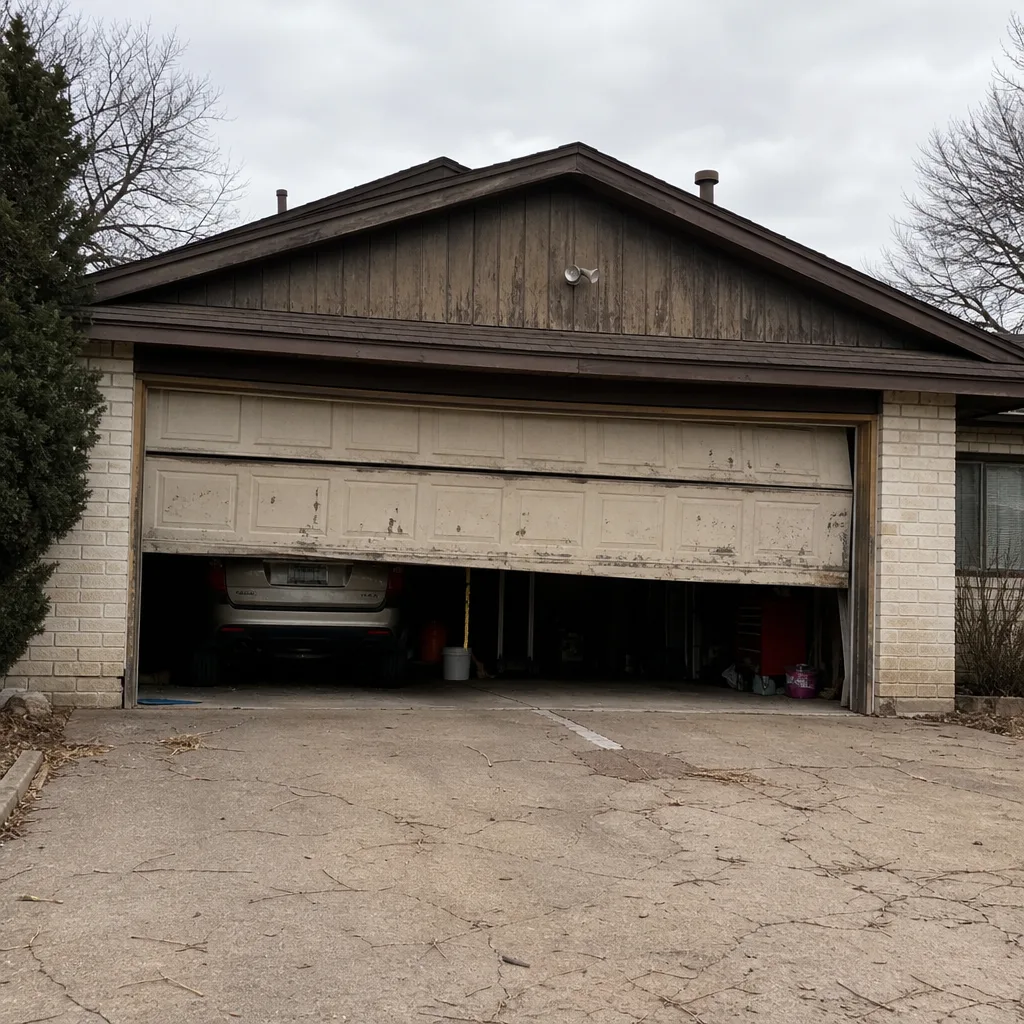 Before
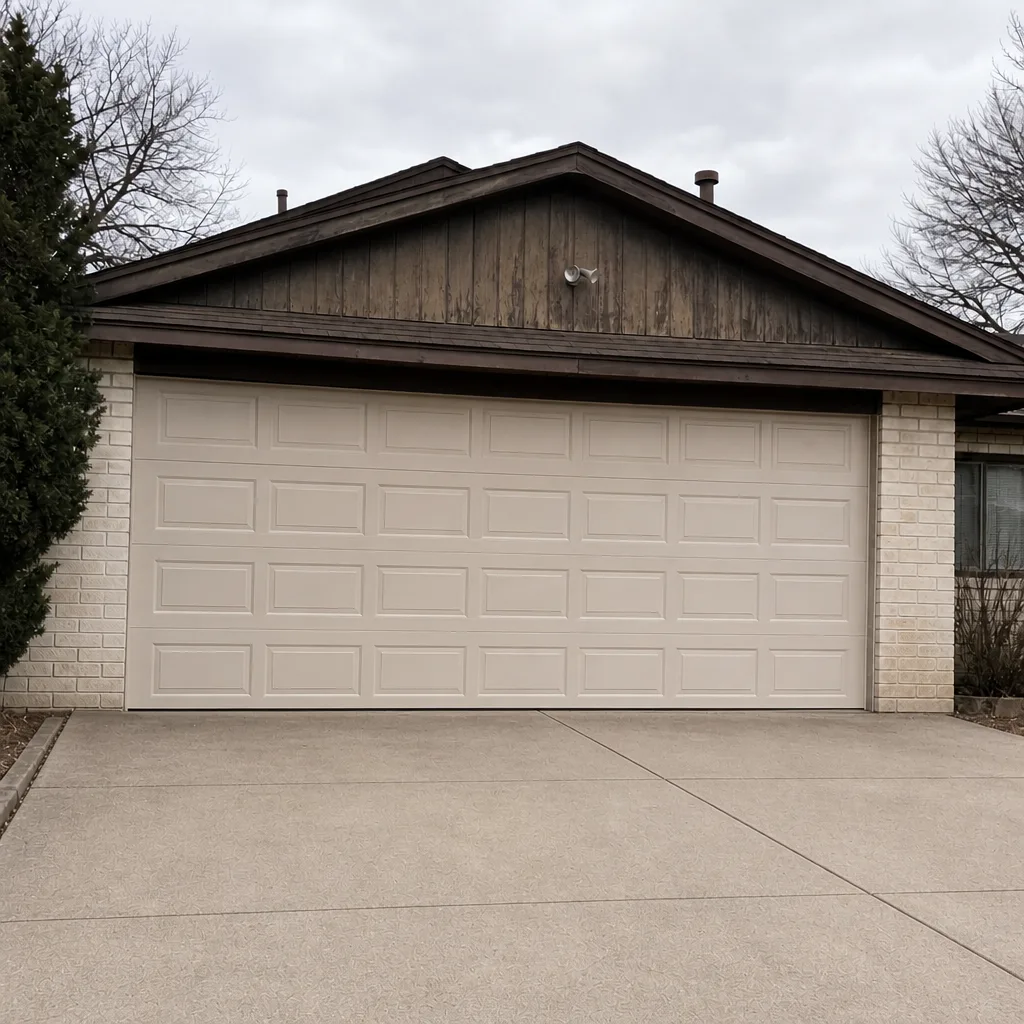 After
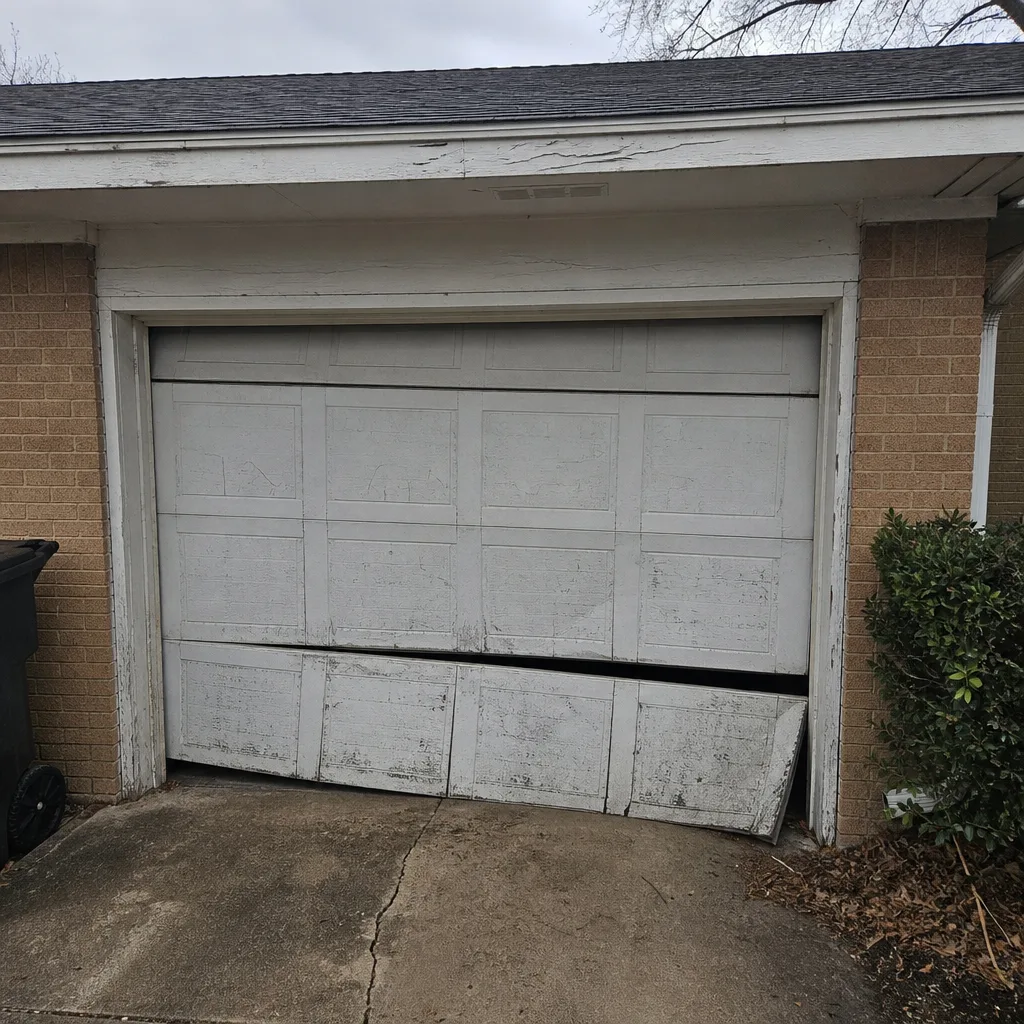 Before
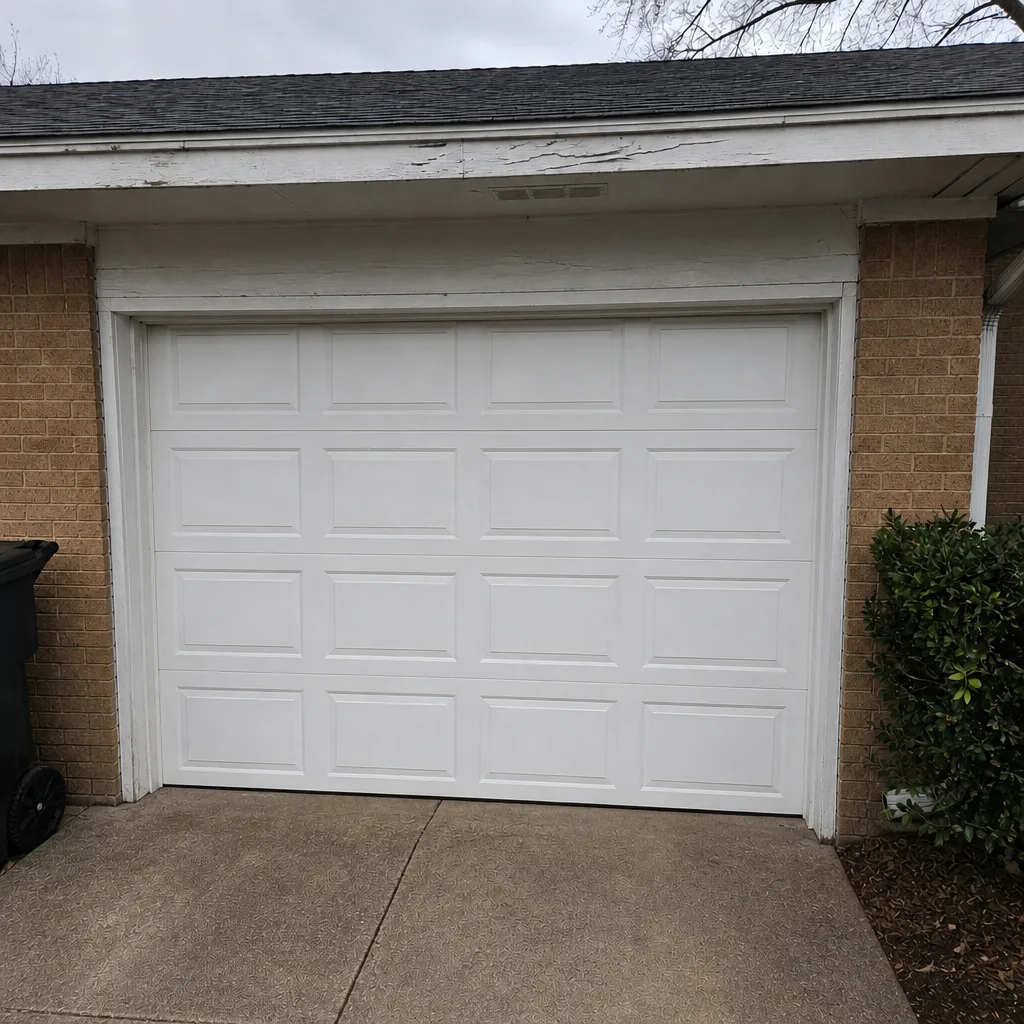 After
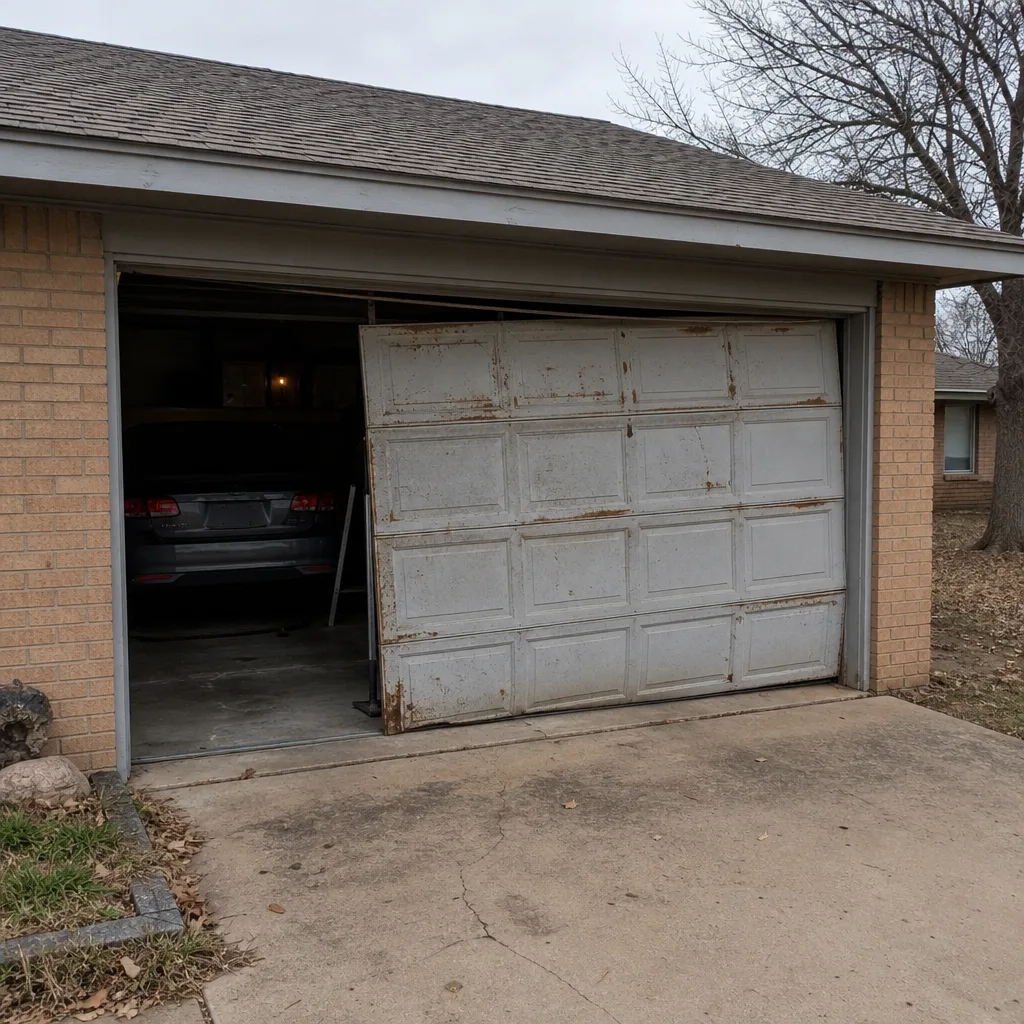 Before
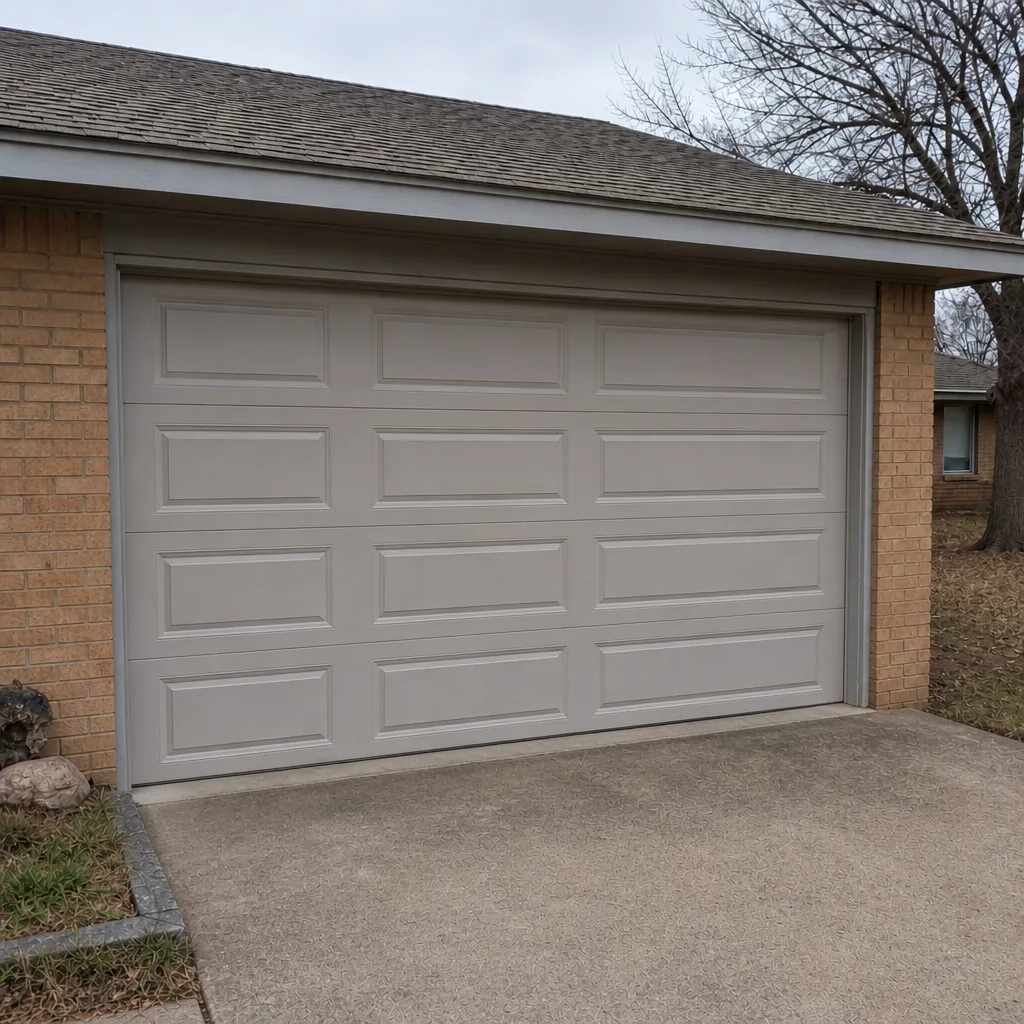 After
When to Call a Professional
Call a technician the moment a symptom points to springs, cables, panels out of track, or anything electrical inside the opener. Those are the categories where a homeowner’s best effort meets real risk. The same goes for a door that’s suddenly heavy, won’t hold its open position, or makes a banging noise you didn’t cause. If your opener’s error signal points to a motor fault or travel limit you can’t resolve with a screw turn, that’s technician work too. Burgess Garage Door Repair offers free estimates in Abilene. Call (844) 834-4604. We answer 24/7. Fast dispatch from 7am to 7pm, Sunday through Friday, and closed Saturdays. A call outside dispatch hours is booked into the next opening, Sunday through Friday, 7am to 7pm.
Frequently Asked Questions
In almost every case, it’s a safety sensor problem rather than a failed motor. Dust from the open plains coats the sensor lenses and blocks the beam more often here than in wetter climates. Wipe both lenses, check for a blockage in the beam path, and run the flashlight test. If the lights are steady and the door still reverses, call (844) 834-4604 for an exact quote. Estimates are free.
Repair calls are usually handled same day when you reach us during dispatch. Call (844) 834-4604. We answer 24/7. Fast dispatch from 7am to 7pm, Sunday through Friday. The price is quoted and agreed before any work starts, so there’s no surprise when the job is done.
No. The written estimate is the price. We look at the door, tell you what’s wrong, and give you a number before we touch anything. If the diagnosis changes once we’re inside the opener or track, we stop and re-quote before continuing.
Spring repair is priced per spring, and a matched pair costs roughly twice a single spring. Typical ranges vary by door weight and style, so the number that matters is the one written on your estimate. Call (844) 834-4604 for an exact quote. Estimates are free.
Write down the code or blink pattern along with your model number, and we’ll translate it. LiftMaster, Chamberlain, and Genie each use a different signaling method, and the model matters as much as the code. Our technicians work on all eight major brands and can diagnose what the panel is telling you. Call (844) 834-4604 or reach us through our Abilene page.
Yes. Our technicians are state-licensed and insured, and they bring the training to work on springs, cables, and opener electricals safely. Our technicians have up to 11 years of experience. Call (844) 834-4604 for an exact quote. Estimates are free and the price is set before any work begins.
The Bottom Line
Most garage door problems announce themselves before they fail. A reversing door is usually a dirty sensor, a door that stalls partway up is usually a pinch in the track or a weakening spring, and a new noise is usually grit that needs cleaning. The trick is reading behavior, not guessing at parts. Abilene’s heat and dust shape which problems show up and when. Keep your sensors clean, keep your rollers lubricated, and stop at spring and cable work every single time. When the diagnosis points to the dangerous stuff, or when you’d rather skip the guesswork, that’s our job. We work on your brand and tell you honestly whether repair or replacement is the right call.
If you’re still not sure what’s wrong, we’re glad to take a look. Call (844) 834-4604 for a free estimate. We answer 24/7. Fast dispatch from 7am to 7pm, Sunday through Friday. You can also read more about our work on our Burgess Garage Door Repair home page. Let’s get your door back on track, the right way, the first time.
Written by the team at Burgess Garage Door Repair.