
Last updated November 15, 2026
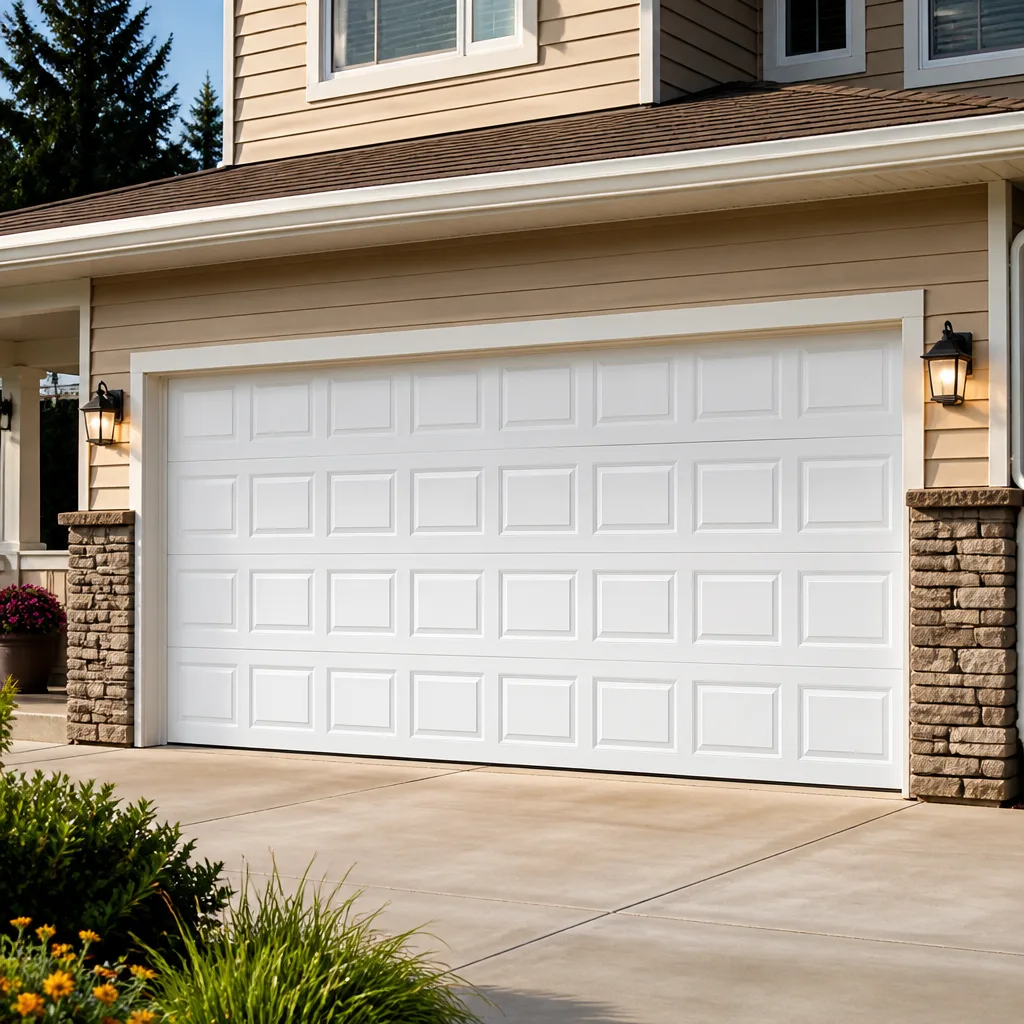 Raised-panel steel
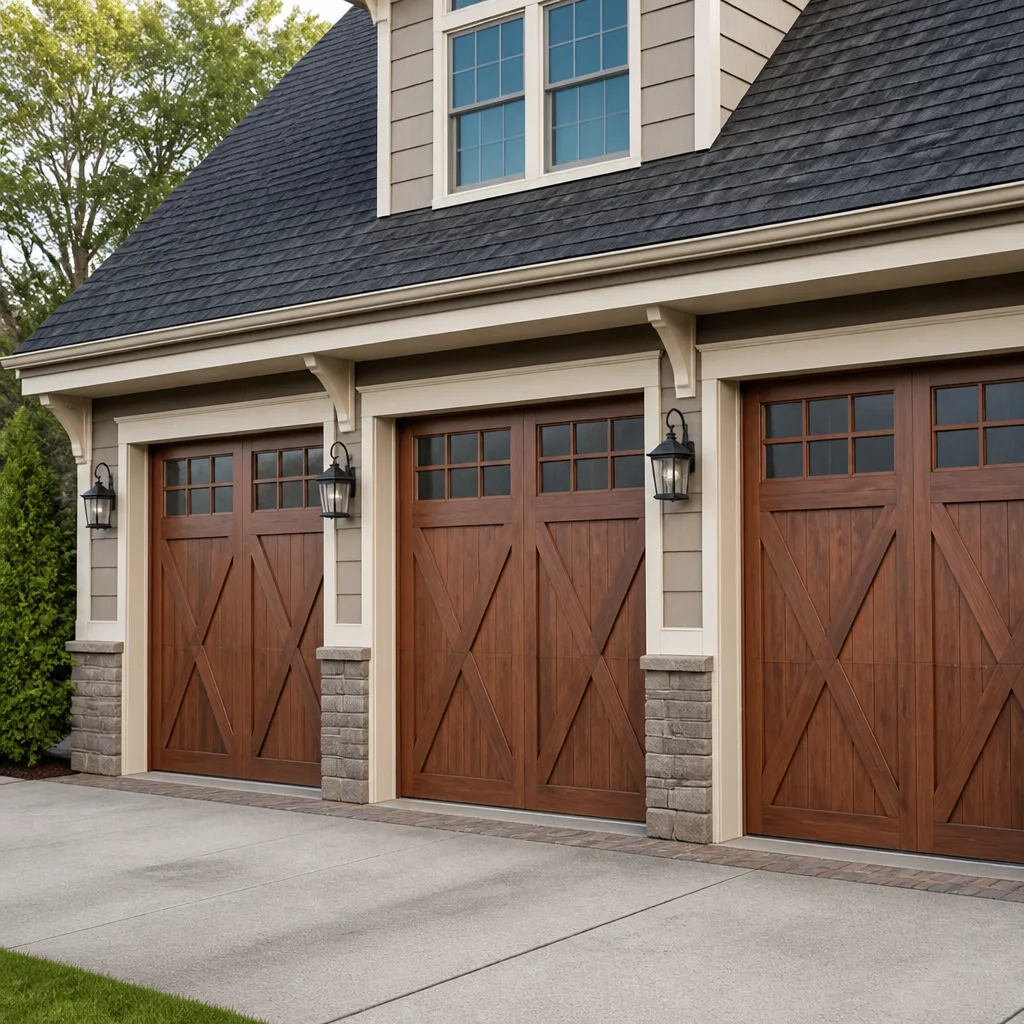 Carriage house
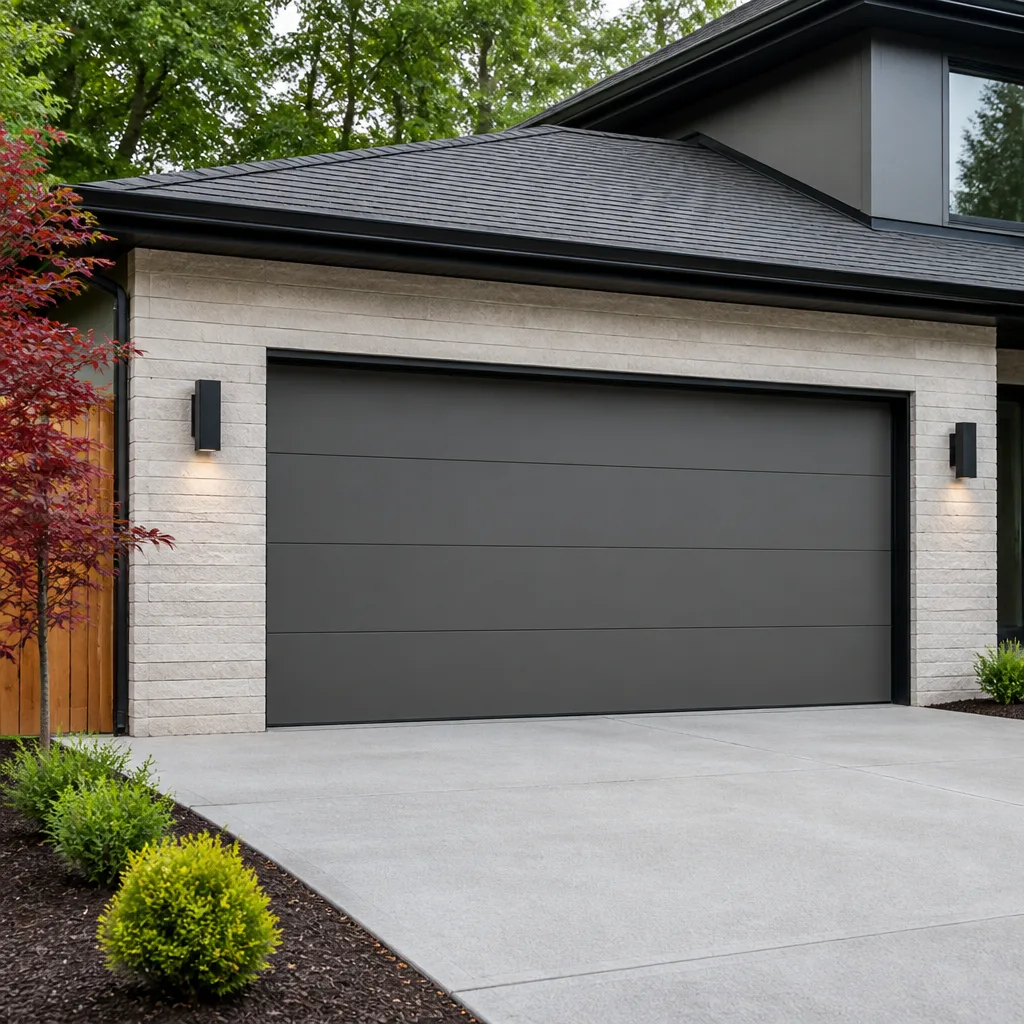 Modern flush
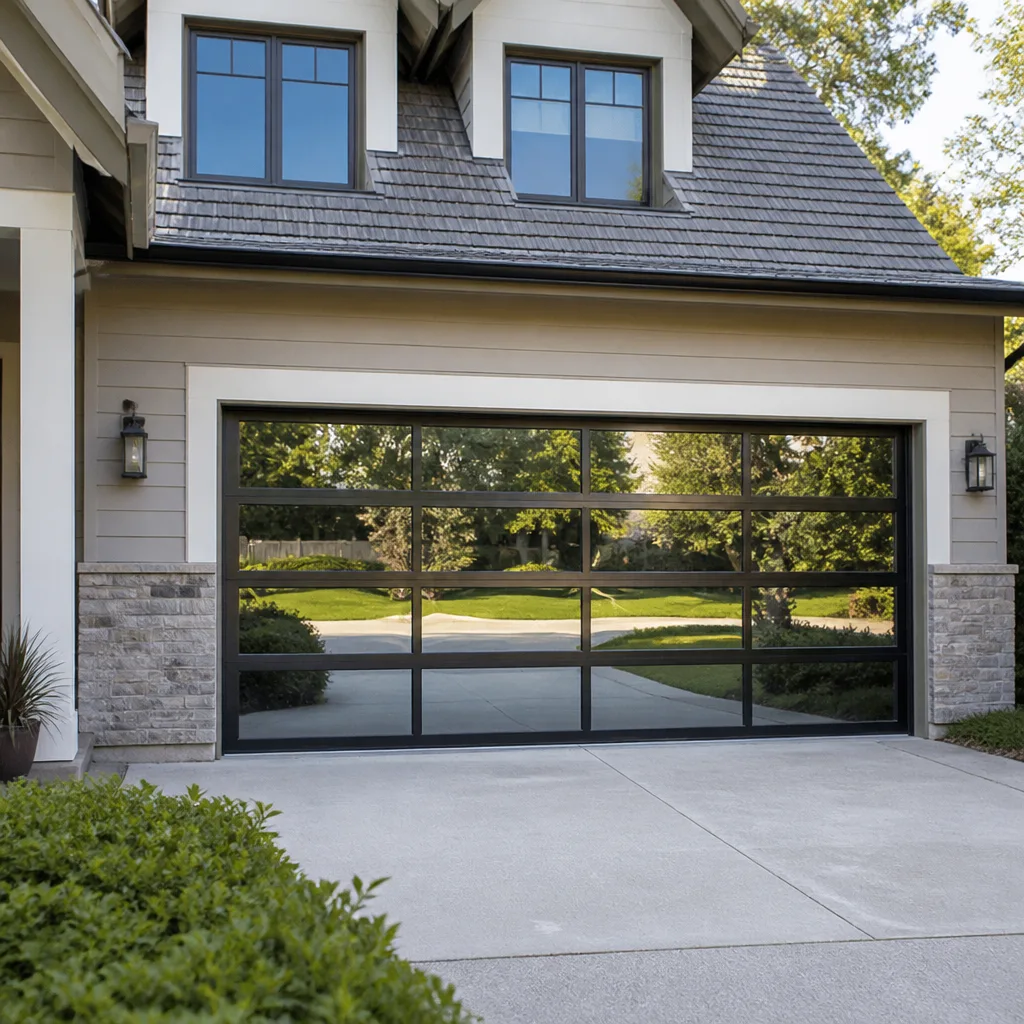 Full-view glass
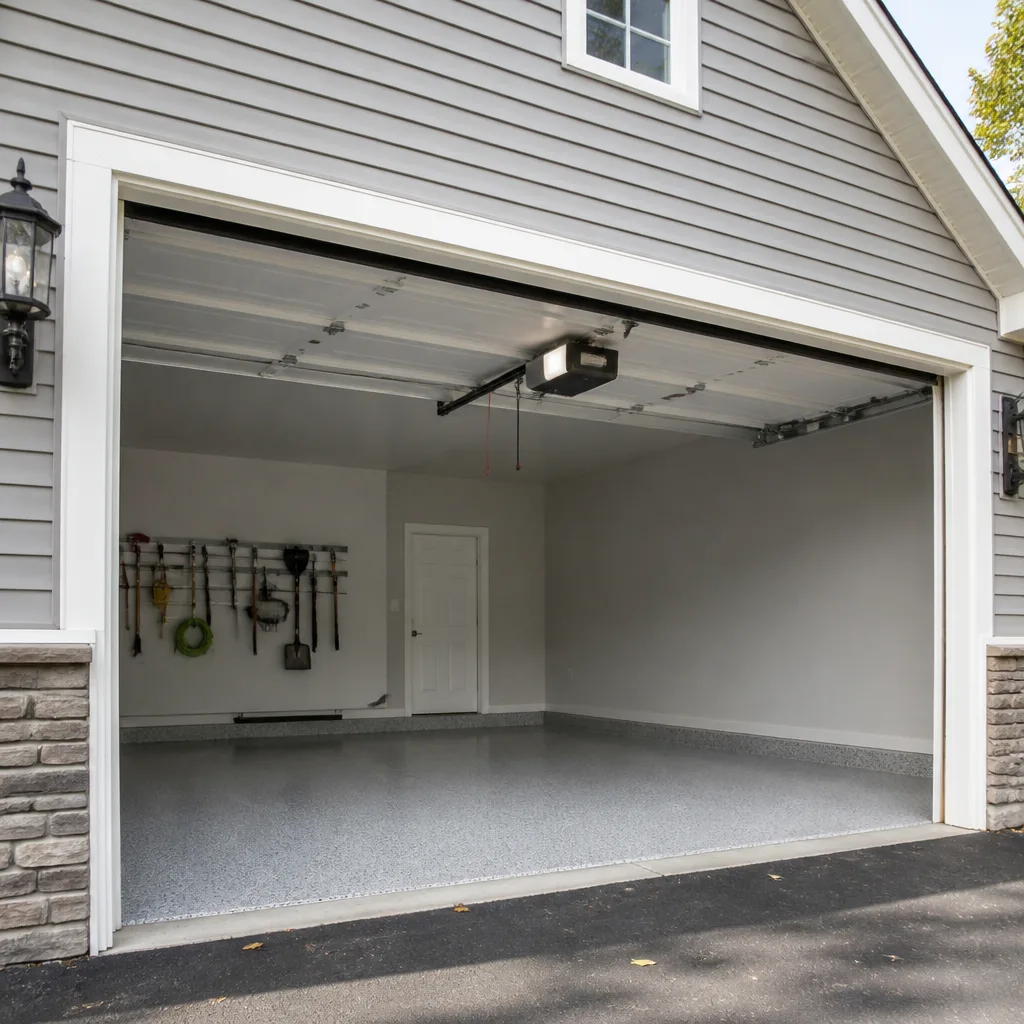 LiftMaster openers
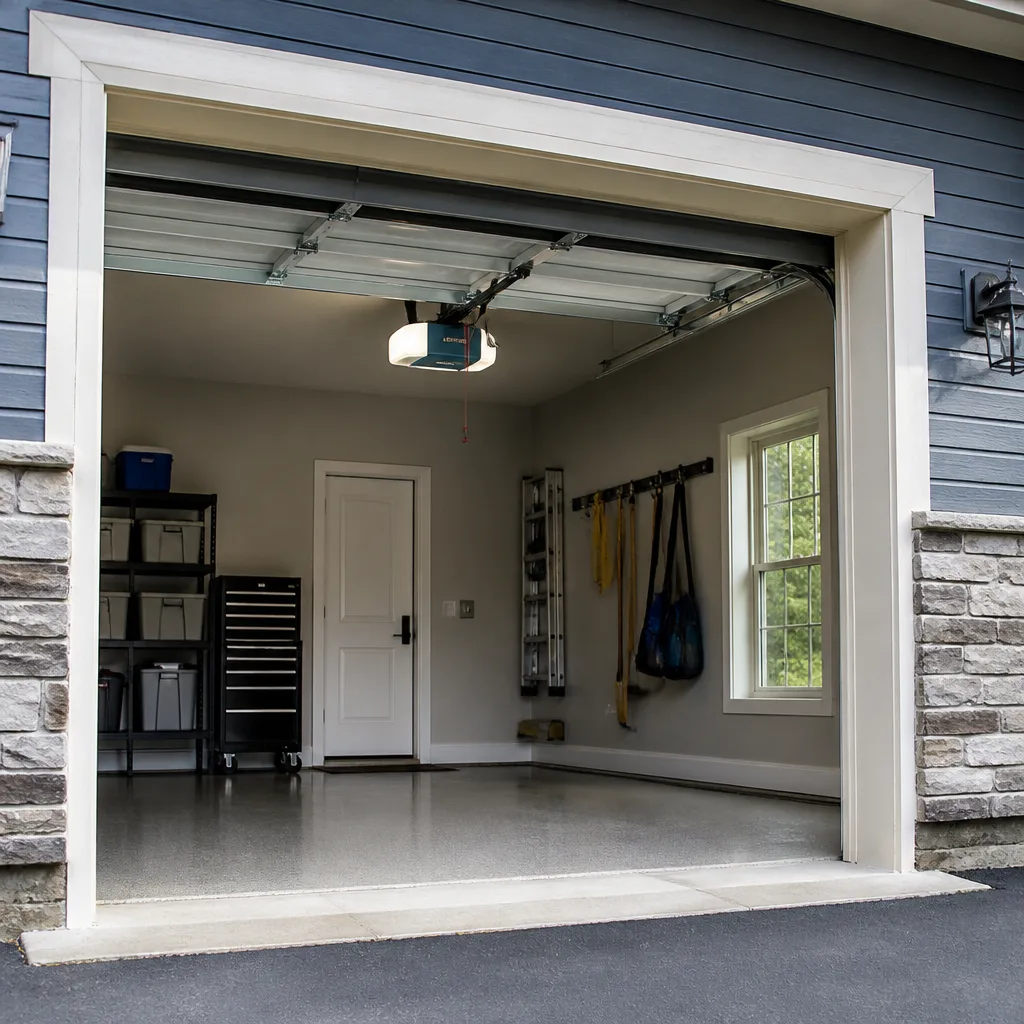 Chamberlain openers
Full 25-point door and opener safety check with every visit - springs, cables, rollers, tracks, and your LiftMaster or Chamberlain opener included
You get a price before we start. It does not change when the pro arrives.
Get your free estimateGarage Door Emergency Preparedness Guide for Abilene Homes
During a West Texas ice storm, the most dangerous garage door moment isn’t when the power goes out. It’s when a homeowner forces a frozen door manually, snaps a cable under tension, and then has to get that door repaired in freezing temperatures while the house is wide open. The frozen seal was never the emergency. The forced opening was. Abilene sits in a stretch of country that throws ice storms, high-wind events and power outages at homes in the same season, and each one calls for a different response. This guide walks through the specific protocols before you need them: manual release when the power fails, safe assessment after wind damage, thawing a frozen seal without wrecking the door, temporary security, and the small kit of parts that turns a three-day wait into a twenty-minute fix.
Quick Answer
A garage door emergency in Abilene is best handled by first identifying which of the three scenarios you’re in: power loss, storm or wind damage, or a frozen seal. Never force a frozen or damaged door by hand. Use the manual release only when the door is clear and the springs are intact, secure the opening afterward, and call a technician for anything involving springs, cables or a door that’s come off its track. Most emergency calls we handle in Abilene trace back to one of these three events, and each has a protocol that keeps you and the door safe.
Styles & brands we work with
- Raised-panel steel
- Carriage house
- Modern flush
- Full-view glass
- LiftMaster openers
- Chamberlain openers
Table of Contents
- The Three Emergencies Abilene Doors Actually Face
- How to Use the Manual Release When the Power Is Out
- What to Do When Your Door Freezes to the Ground Seal
- How to Assess a Wind-Damaged Door After a Storm
- Temporary Security When the Opener Fails or a Panel Is Damaged
- What to Keep on Hand Before an Emergency
- Why Knowing Your Brand Matters in an Emergency
- Seasonal Checks That Prevent Most Emergencies
The Three Emergencies Abilene Doors Actually Face
Garage door emergencies in Abilene aren’t random. They cluster around three events, and knowing which one you’re in tells you what to do next. The first is a power outage. A thunderstorm, a wind event or a grid failure kills the opener, and the door won’t budge. The second is storm damage: high wind bows a panel, pops a roller out of its track, or twists the door so it binds on one side. The third is an ice storm that freezes the bottom seal to the concrete and welds the door shut until it’s thawed properly.
Each scenario has a different first move. During a power outage, the manual release is your answer, and it’s safe when the door is clear and undamaged. After wind damage, the correct first move is to stop. Don’t run the opener. Don’t force the door. A panel that’s been stressed by wind can drop out of its track and cause injury, and a door that’s been pushed past its stops can kink a track beyond a simple fix. For a frozen seal, the first move is patience and safe heat, never force.
The reason this matters for Abilene homes specifically is that all three events overlap in the same season. A windy spring can produce a power outage and a damaged panel in the same afternoon. An ice storm can knock out power and freeze the seal within hours. Preparing for one scenario but not the others leaves a gap. Our garage door repair services cover storm damage, opener failures and seal issues, but the first ten minutes of any emergency are on the homeowner, and that’s where this guide lives.
One more local factor: Abilene homes are spread across wide temperature swings. A door installed in summer sees its springs, cables and rollers work in one range, and then meets a hard freeze or a 100-degree day without warning. That thermal swing is what makes small issues turn into emergencies. A cable that’s slightly worn in July can go in January when the metal contracts. A seal that sits tight in mild weather can freeze to the floor in one cold snap.
How to Use the Manual Release When the Power Is Out
Every modern opener has a manual release, and knowing how to use it safely is the single most useful emergency skill a homeowner can have. It’s how you get the car out during a power outage in Abilene. It’s also how cars get stuck when it’s used wrong. The release works by disconnecting the trolley from the drive system, which puts the full weight of the door on the springs, tracks and cables. That’s fine when everything is intact. It’s dangerous when a spring is broken or a door is off-track.
Before pulling the release on any opener, walk through this sequence:
- Look at the door and check that the springs above it are intact. A broken spring shows as a visible gap in the coil or two separated halves.
- Check that the door is fully closed. Never pull the release with the door partway up, since gravity will bring it down.
- Stand clear of the door’s path and reach up to the release cord hanging from the trolley. On LiftMaster and Craftsman openers, the cord often has a red handle; on Wayne Dalton and Raynor units, it may be a plain T-handle.
- Pull the cord toward the door, not toward you, at a slight angle. Feel for the trolley disengaging. If it doesn’t disengage with moderate pull, stop. Don’t yank.
- Lift the door by hand to about chest height and let go. It should stay roughly in place thanks to the spring tension. If the door drops fast or falls, the springs aren’t holding and it’s not safe to use.
- Open the door the rest of the way and pull the car out. Close the door by hand and lower it fully.
- Re-engage the trolley by running the opener or by lifting the door by hand until it clicks back into the carrier.
Two things get people in trouble. First, some openers have a lock feature on the wall control that disables the release. If the trolley won’t move, check the wall control button for a lock icon or press and hold it to disengage. Second, if the release cord is missing or broken, don’t try to make one with wire or string. Get a replacement cord or call us. The tension on the trolley isn’t high, but the timing of a door falling on someone reaching for a homemade cord is.
If you’re unsure whether your door is safe to release, garage door opener repair can sort it out fast. We answer 24/7 and dispatch from 7am to 7pm, Sunday through Friday.
What to Do When Your Door Freezes to the Ground Seal
A frozen seal is the quietest emergency on this list and the one most likely to cause damage. The door didn’t break. The opener didn’t fail. But when the rubber bottom seal welds to the concrete during an Abilene ice storm, running the opener rips the seal, strains the opener’s gears and can snap a cable. Forcing the door by hand can bend a panel. The right approach is to thaw the seal without applying force to the door. Do that and the door opens as normal. Skip it and you’re looking at repair work.
What actually works:
- Warm water along the seal. Pour a slow stream of warm – not hot – water along the bottom edge where the rubber meets the concrete. Hot water on cold rubber can crack it. Warm water softens the bond in a couple of minutes.
- A heat gun or hair dryer on the low setting. Sweep it along the base of the seal, moving constantly. Never hold it in one spot or touch the door panel with the nozzle. Melted paint or a scorched seal is a worse problem than the freeze.
- A rubber mallet, gently. After the seal has started to soften, tap along the bottom edge of the door with a rubber mallet, not metal. The vibration breaks the remaining ice bond. Don’t hit the panel itself.
- Wait for a warm afternoon. If the door isn’t in the way and you can use the front door, letting the sun do the thawing is the safest option. Abilene afternoons tend to warm enough within a day or two.
What damages the door:
- Running the opener “to break it loose.” This is the single biggest cause of seal tears and opener gear failures after an ice storm.
- Prying at the seal with a screwdriver or pry bar. The seal tears and the panel edge bends.
- Pouring boiling water along the bottom and hitting the door with force. The thermal shock can crack the seal and warp a metal panel edge.
- Using a blowtorch or open flame. This isn’t a garage door technique and it’s dangerous.
If the door has already torn a seal or run the opener during the freeze, a repair call is the safer path. We work on Clopay, Amarr, Wayne Dalton and other panels so the fix matches the existing door rather than a patch that fails by spring.
How to Assess a Wind-Damaged Door After a Storm
After a high-wind event in Abilene, the first question isn’t “how do I fix it.” It’s “is it safe to touch.” A wind-damaged door can look fine and still be dangerous, or look awful and be functionally sound. What follows is an assessment sequence, not a repair guide. If you can answer yes to any of the dangerous conditions, stop and call.
- Stand back and look at the whole door from the street. Is it level? Does one side sit higher than the other? A door that’s out of level tells you the track, the springs or the panels have shifted.
- Check the tracks on both sides. Run your eyes down each vertical track. A bend, a gap from the wall, or a track that’s tilted off vertical is a serious finding. Don’t push it back into place yourself.
- Examine the panels for separation. Look at the seams between sections. If any gap has opened, a panel is warped and the door’s structural integrity is compromised. Running the opener will make it worse.
- Look for a broken spring or slack cable. Above the door, springs should be intact and cables should be taut. Any visible gap in a coil or a cable hanging loose is a stop-and-call.
- Test the door by hand only if you answered “safe” to all of the above. Lift it six inches with the opener disengaged. It should feel smooth and light. If it’s heavy, binding, or doesn’t want to move evenly, don’t force it.
- If everything checks out, run the opener once and watch the whole travel. Listen for a grinding sound, watch for the door jerking on one side, and stop the door immediately if anything looks or sounds wrong.
The dangerous conditions aren’t always obvious. A door with a broken spring on one side may sit level because the other spring is holding it. A panel that’s creased but intact can look rough and be safe to operate for a day or two until it’s repaired. The key distinction: if the door’s tracks are bent, springs are broken, or cables are loose, it’s not safe and shouldn’t be operated by the homeowner.
After a storm, we often hear from Abilene homeowners who ran the opener and made a bent track worse. A door that could have been straightened becomes a door that needs a full track and panel replacement. If you’re unsure, leave the door closed and call. Free estimates mean there’s no cost to have someone look.
Temporary Security When the Opener Fails or a Panel Is Damaged
An emergency isn’t over when the door stops moving. If the opener fails or a panel is damaged, the house is open. Temporary security is the next job, and doing it right for a night or two beats leaving the garage exposed while you wait on a repair. The goal is to secure the opening without causing further damage to the door.
Options that work, in order of practicality:
- Use the manual lock on the door itself. Many residential doors have slide locks inside, one on each side of the bottom panel. Reach inside the garage, slide both pins through the track, and engage them. This locks the door at the door, which is how it was designed to be secured before openers existed.
- Disconnect the opener and use the door’s own hardware. Once the trolley is disengaged, the door can be manually locked without fighting the opener.
- If a panel is damaged and won’t close all the way, secure the opening with a temporary bar. A length of 2×4 cut to width, braced against the inside of the door and the garage floor, keeps it from being pushed in from outside. This buys time. Don’t run the opener with a bar in place.
- Lock the door to the house and use that as the secure barrier. If the garage door won’t close, the door between the garage and the house is the primary barrier. Confirm it’s locked and treat the garage as unsecured for the night.
What doesn’t work: leaving the door in a half-open position and hoping it stays. A door under spring tension with a compromised opener can drift down overnight, or worse, come down hard on something under it. If it can’t close fully, keep it fully open and secure the opening with a bar or by other means.
If you’re stuck in this situation in Abilene, a same-day call can get the door back into a proper state. Call (844) 834-4604. We answer 24/7. Fast dispatch from 7am to 7pm, Sunday through Friday.
What to Keep on Hand Before an Emergency
The difference between a twenty-minute fix and a three-day wait is usually a small kit. Not tools for replacing springs or cables – that work should always go to a professional – but the parts and items that let you handle the first hour yourself. In our experience, most homeowners call us for something simple that a ten-dollar part and a flashlight would have covered, but they don’t know that until after the door is stuck.
Keep these in a labeled bin in the garage, near the door:
- A spare manual release cord. The cord on the trolley is the first thing to break or go missing. A replacement cord from the opener’s manufacturer is cheap and takes minutes to install. Know which brand your opener is (LiftMaster, Craftsman, Genie, Chamberlain, Raynor, Wayne Dalton) so the replacement matches.
- A good flashlight and fresh batteries. Every emergency starts in the dark. A headlamp is better than a handheld since both hands are free.
- A rubber mallet. Useful for gently breaking a frozen seal loose and tapping a door back into its track after minor misalignment, not for anything requiring force.
- A hair dryer or small heat gun with a low setting. For thawing frozen seals and hinges. Never for heating a spring or cable.
- A length of 2×4 cut to the width of your door. For temporary bracing when the door won’t close.
- The opener’s manual and model number. If you can’t find the manual, take a photo of the opener’s label and keep it on your phone. In an emergency, the model number is the first thing we ask for.
The parts kit isn’t about doing repairs yourself. It’s about not being stuck making decisions at 11pm in the dark. Have a spare release cord, a light, and a way to thaw the seal, and most emergencies downgrade from panic to annoyance.
Why Knowing Your Brand Matters in an Emergency
Garage doors and openers are not universal. A spring, a cable, a roller, an opener’s circuit board, a safety sensor – each is spec’d to the system it belongs to. When a tech arrives without knowing the brand, the first ten minutes are spent identifying the system, and if a part is needed, the trip back to a supplier is what turns a same-day repair into a three-day wait. Knowing your brand before an emergency is a small bit of preparation with outsized effect.
We work on eight major brands: LiftMaster, Chamberlain, Genie, Clopay, Amarr, Wayne Dalton, Craftsman and Raynor. Our technicians have up to 11 years of experience and arrive already familiar with how each brand’s opener and door system works. That means fewer “let me check on that” calls and fewer second visits. Brand-agnostic service is the reason for it – we work on the door and opener you already own rather than steering you toward a replacement you didn’t ask for.
The practical side of this for Abilene homeowners: take a photo of the opener’s model label and the door’s brand stamp (usually on the inside of the top or bottom panel) and save both to your phone. When you call in, tell us the model. That’s often the difference between a same-day opener repair and a scheduled follow-up.
If you can’t find the label, that’s not a problem. Call us and describe the door and opener. We can usually identify it from photos. Abilene homeowners call us for exactly this kind of pre-emergency identification all the time, and it costs nothing to ask.
Seasonal Checks That Prevent Most Emergencies
Most garage door emergencies we see in Abilene were preceded by a smaller issue that went unnoticed. A seal that’s starting to stiffen. A cable that’s got one frayed strand. An opener that’s been making a faint grinding noise for a month. None of these are emergencies on the day they start. All of them are when the ice storm or the wind event hits.
A ten-minute seasonal walk-through catches most of them:
- Test the safety reverse once a month. Place a roll of paper towels in the door’s path and close it with the opener. The door should reverse on contact. If it doesn’t, that’s an opener or sensor issue to address before anything else.
- Look at the springs and cables. A gap in a coil, slack in a cable, or a visible kink is a stop-and-call issue. Don’t try to fix springs or cables yourself – the tension is dangerous.
- Check the seal against the floor. Run a hand along the bottom edge with the door closed. Any gap or stiff spot is a seal that will freeze harder in a cold snap.
- Balance test the door by hand. Disconnect the opener and lift the door halfway. It should hold in place. If it drifts down, the springs are losing tension and should be checked.
- Lubricate the rollers, hinges and springs with a proper garage door lubricant. Not WD-40, not motor oil. A garage door lubricant keeps the moving parts working in cold and hot weather.
- Check the weatherstrip on the sides and top of the opening. Any gap invites wind-driven rain and detritus behind the seal, which accelerates wear.
Do these checks on a comfortable day, not the day the power goes out. In our experience most emergency calls would have been a routine repair a month earlier if a homeowner had run through this list.
Common Mistakes to Avoid
- Forcing a frozen door with the opener. Running the opener to “break loose” a frozen seal is the top cause of torn seals and stripped opener gears after an Abilene ice storm. Thaw the seal first, then run the door.
- Pulling the manual release with the door partway open. The door’s weight is on the springs, not the trolley. Release it when open and gravity brings it down. Only pull the release with the door fully closed.
- Running a wind-damaged door to “see if it works.” A bent track or warped panel plus the opener’s force can push the door off its stops. Assess the damage first, and stop if anything is off.
- Assuming the door is fine because it looks fine. A broken spring on one side, a single frayed cable strand, or a roller that’s popped out of its track can look normal from outside. Test the door by hand before trusting it.
- Bracing the door with the opener still connected. A 2×4 against the door while the opener is running fights the opener and can burn out the motor or bend the door. Disconnect the trolley first.
- Trying to fix springs or cables. These are the two parts of a garage door under enough tension to cause serious injury. No homeowner repair. Call a technician.
- Skipping the seasonal check because the door “worked last time.” A door that worked in October can fail in January. The seasonal walk-through is what catches the small problem before it becomes the emergency.
See the difference
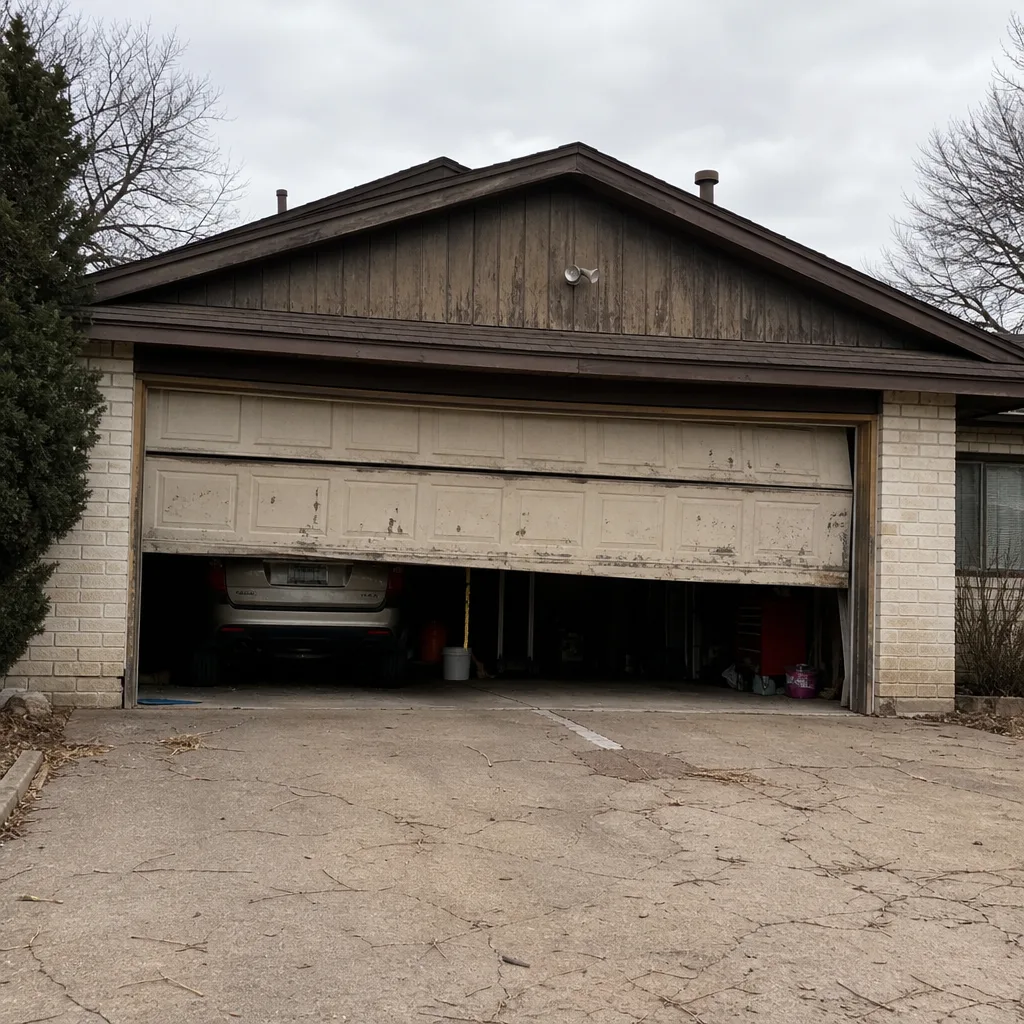 Before
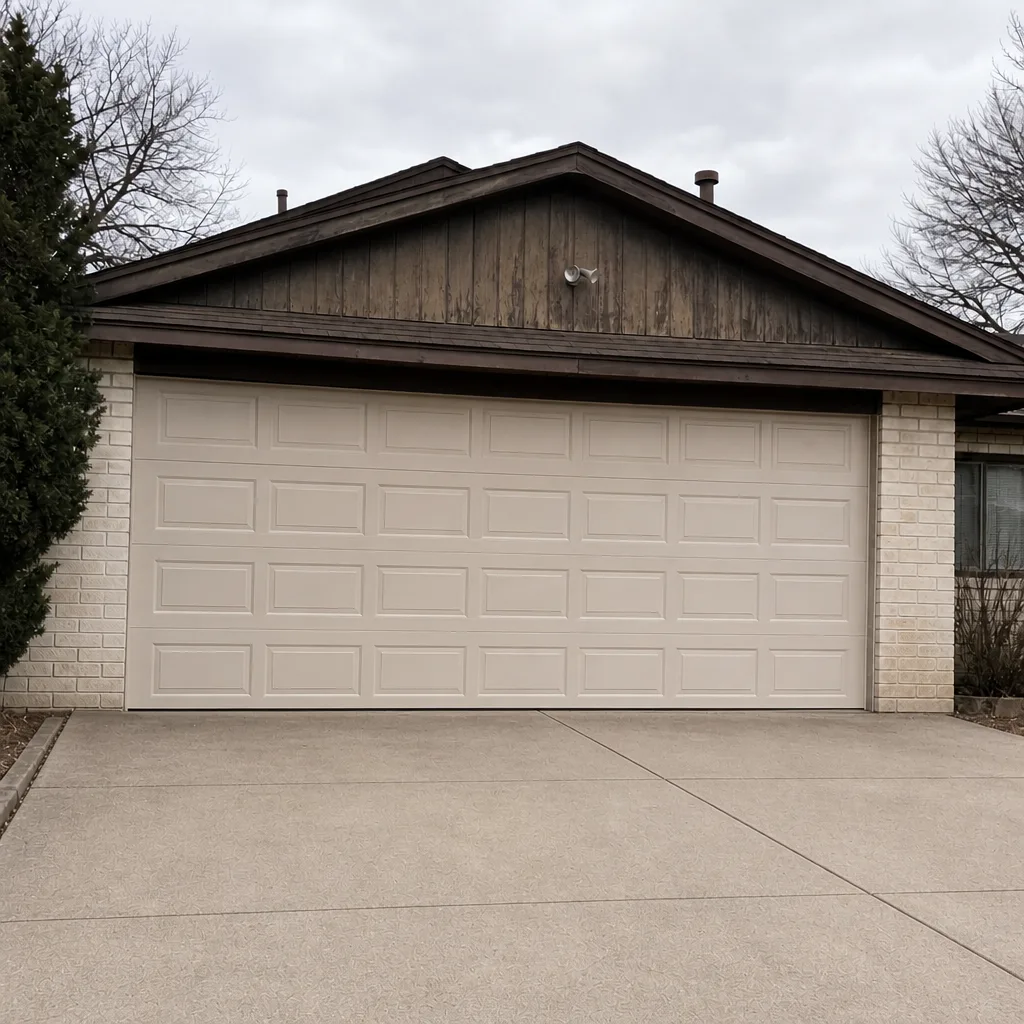 After
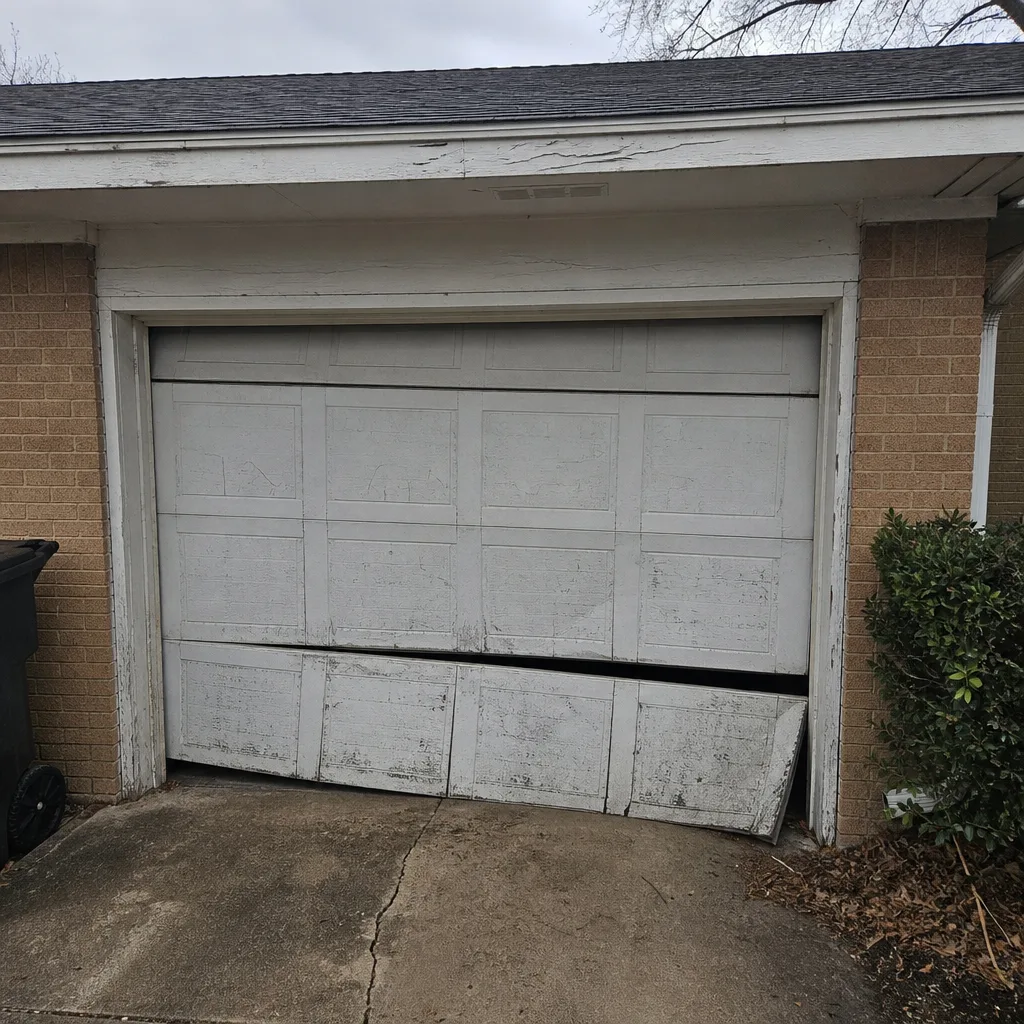 Before
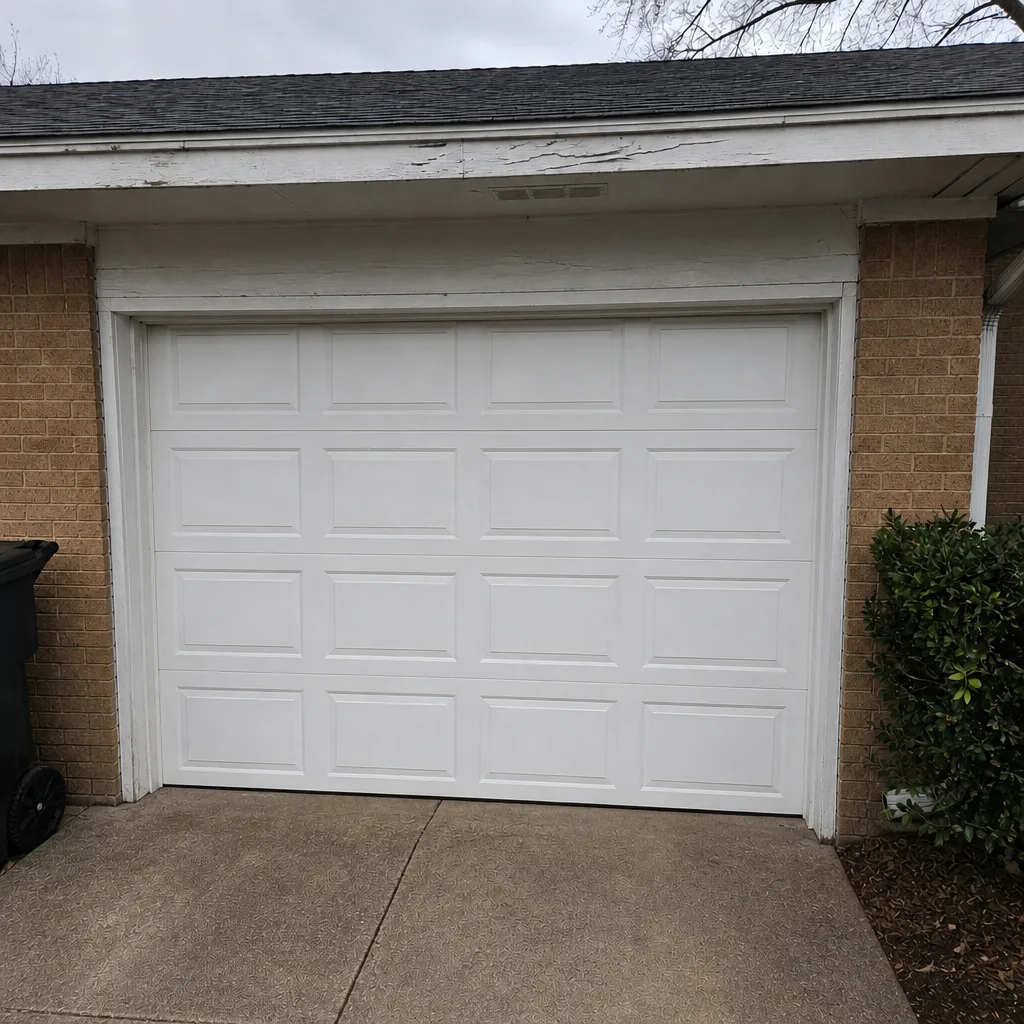 After
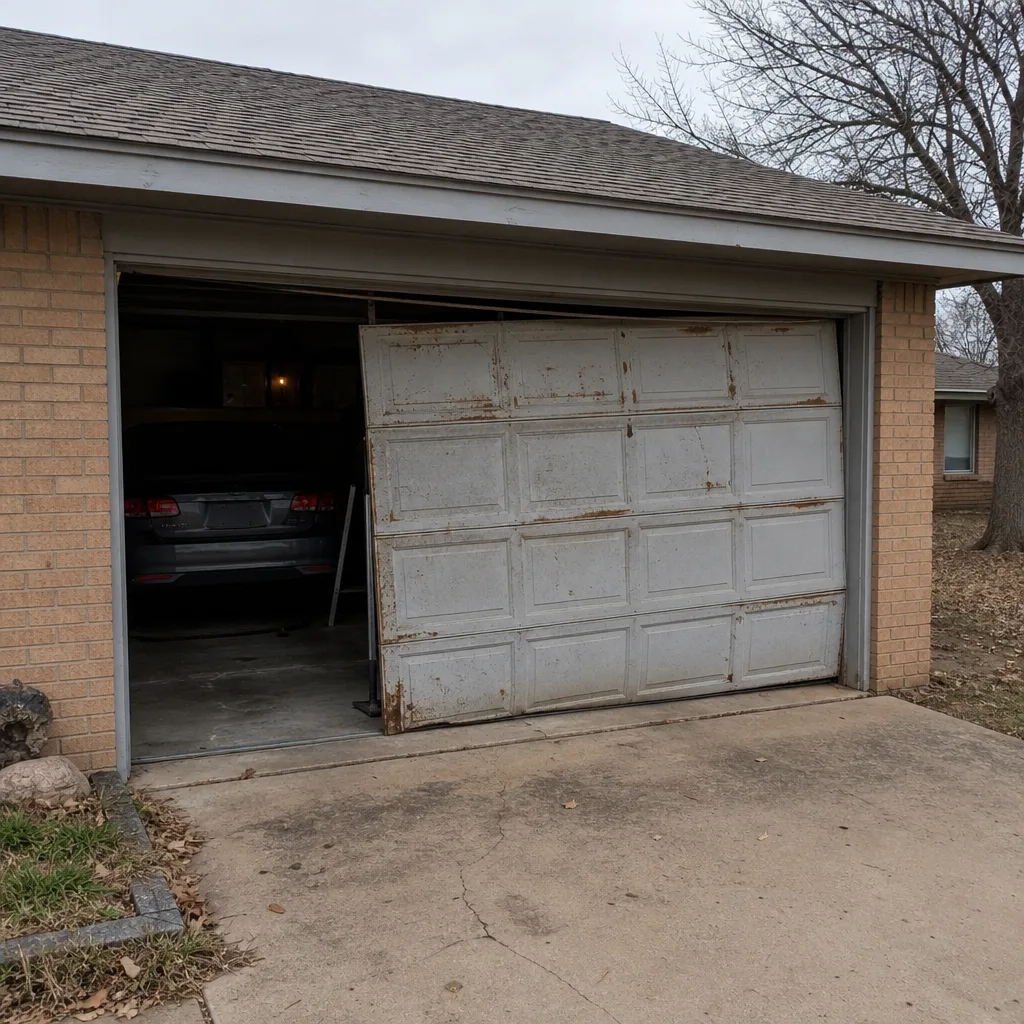 Before
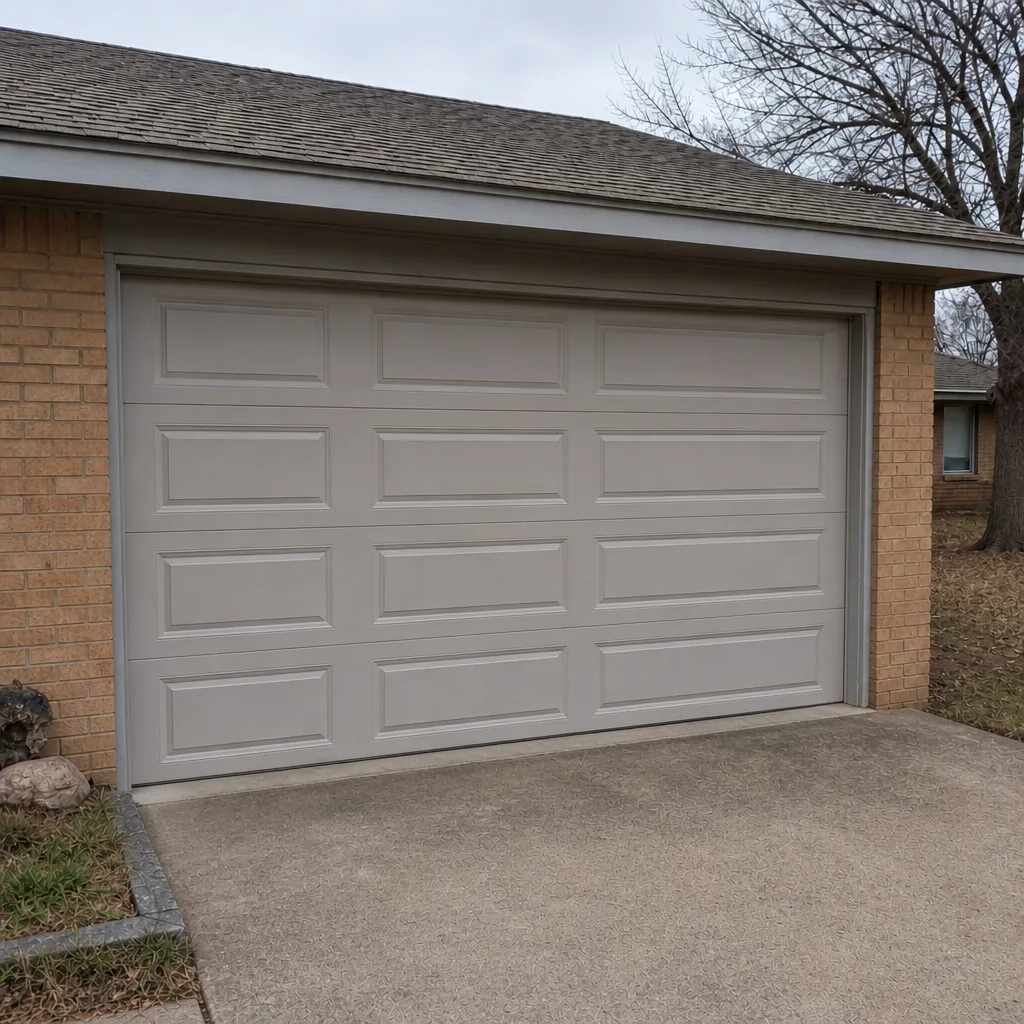 After
When to Call a Professional
Call a professional for anything involving springs, cables, tracks that have shifted, or a door that’s come out of its track. Those are the parts of a garage door under the most tension and the parts where a homeowner repair goes wrong fastest. Also call if the opener is making a grinding sound, the safety reverse fails, the door won’t stay balanced by hand, or the door is binding on one side. In Abilene, we see most emergency calls land in one of those categories after a storm or a cold snap. Burgess Garage Door Repair offers free estimates in Abilene – call (844) 834-4604. We answer 24/7, with fast dispatch from 7am to 7pm, Sunday through Friday. The written estimate sets the price before any work starts.
Frequently Asked Questions
Use the manual release cord hanging from the trolley above the door. Make sure the door is fully closed and the springs are intact first, then pull the cord toward the door until the trolley disengages. Lift the door by hand to check the springs are holding, then open it the rest of the way and pull the car out. Call (844) 834-4604 if you’re unsure the door is safe to release – estimates are free.
No. Running the opener on a frozen door is the most common cause of torn seals and stripped opener gears after an ice storm. Thaw the seal first with warm water, a hair dryer on low, or a rubber mallet tapped gently along the bottom edge, then run the door as normal. If the door has already torn a seal or run the opener during a freeze, call (844) 834-4604 – the sooner it’s looked at, the less likely a bigger repair.
It’s safe to touch only if the tracks are straight, the springs are intact, the cables are taut, and the panels haven’t separated at the seams. If any of those conditions is off, leave the door closed and don’t run the opener. Assess by eye first, and test by hand only if everything looks right. When in doubt, call (844) 834-4604 – we’ll tell you what to look for before you touch anything.
Emergency garage door repairs in Abilene are priced per job, and the written estimate you get before work starts is the price. The range depends on what’s wrong (spring, cable, opener, panel, track) and what parts are needed. There’s no surcharge for same-day work, and the estimate is free. Call (844) 834-4604 for an exact quote – estimates are free.
Yes, on most residential doors. Reach inside the garage, slide the manual lock pins on each side of the bottom panel through the track, and the door is secured at the door itself. This is how doors were locked before openers existed and it works whenever the door is fully closed. If a panel is damaged and the door won’t close fully, secure the opening with a 2×4 brace and call (844) 834-4604.
We service LiftMaster, Chamberlain, Genie, Clopay, Amarr, Wayne Dalton, Craftsman and Raynor. Our technicians have up to 11 years of experience and arrive already familiar with how each system works, which shortens diagnosis and reduces second visits. Brand-neutral service means we work on the equipment you already own rather than steering you toward a replacement. Call (844) 834-4604 to describe the door and opener you have – estimates are free.
The Bottom Line
A garage door emergency in Abilene rarely starts as one. It starts as a stiff seal or a slightly worn cable that meets an ice storm or a wind event. The preparation is simple: know which of the three scenarios you’re in, learn the manual release sequence, thaw before you force, and keep a small kit on hand so the first hour isn’t spent in the dark. Assess wind damage by eye before you touch anything, and never repair springs or cables yourself. The Burgess Garage Door Repair team works on eight major brands and offers free estimates in Abilene. Call (844) 834-4604 for yours – we answer 24/7, with fast dispatch from 7am to 7pm, Sunday through Friday.
Written by the team at Burgess Garage Door Repair.